

HEMA MANUAL is a comprehensive guide to the modern practice of Historical European Martial Arts (HEMA). From historical treatises and weapon traditions to protective equipment, tournaments, and club life, it brings together the essential knowledge every HEMA practitioner should understand.
HEMA book designed for both beginners and experienced fencers, the book explores historical sources, weapon simulators, protective gear, training methodology, competition, and the structure of the international HEMA community.
It also examines club culture, leadership, safety, and responsibility, while featuring insights from instructors, competitors, referees, organizers, and industry professionals. Together, these perspectives provide a broader understanding of modern HEMA, its challenges, and its future development.
HEMA practitioners at all levels
People beginning their journey into HEMA
Instructors, coaches, and club organizers
Those planning their first equipment purchases
People transitioning between weapon systems
Competitors, referees, and event organizers
Readers seeking context beyond individual treatises
Anyone interested in the HEMA community, club culture, and the future of the discipline
HEMA MANUAL is an orientation guide to the world of Historical European Martial Arts (HEMA). Rather than teaching specific techniques, it provides the context needed to understand modern HEMA, its historical foundations, equipment, training methods, clubs, competitions, and international community.
Created to support and promote HEMA as a living practice, the book explores the connections between historical sources, physical training, safety, responsibility, and community development. It presents HEMA not simply as a sport, reenactment activity, or hobby, but as a global culture that brings together practitioners, instructors, clubs, and events across the world.
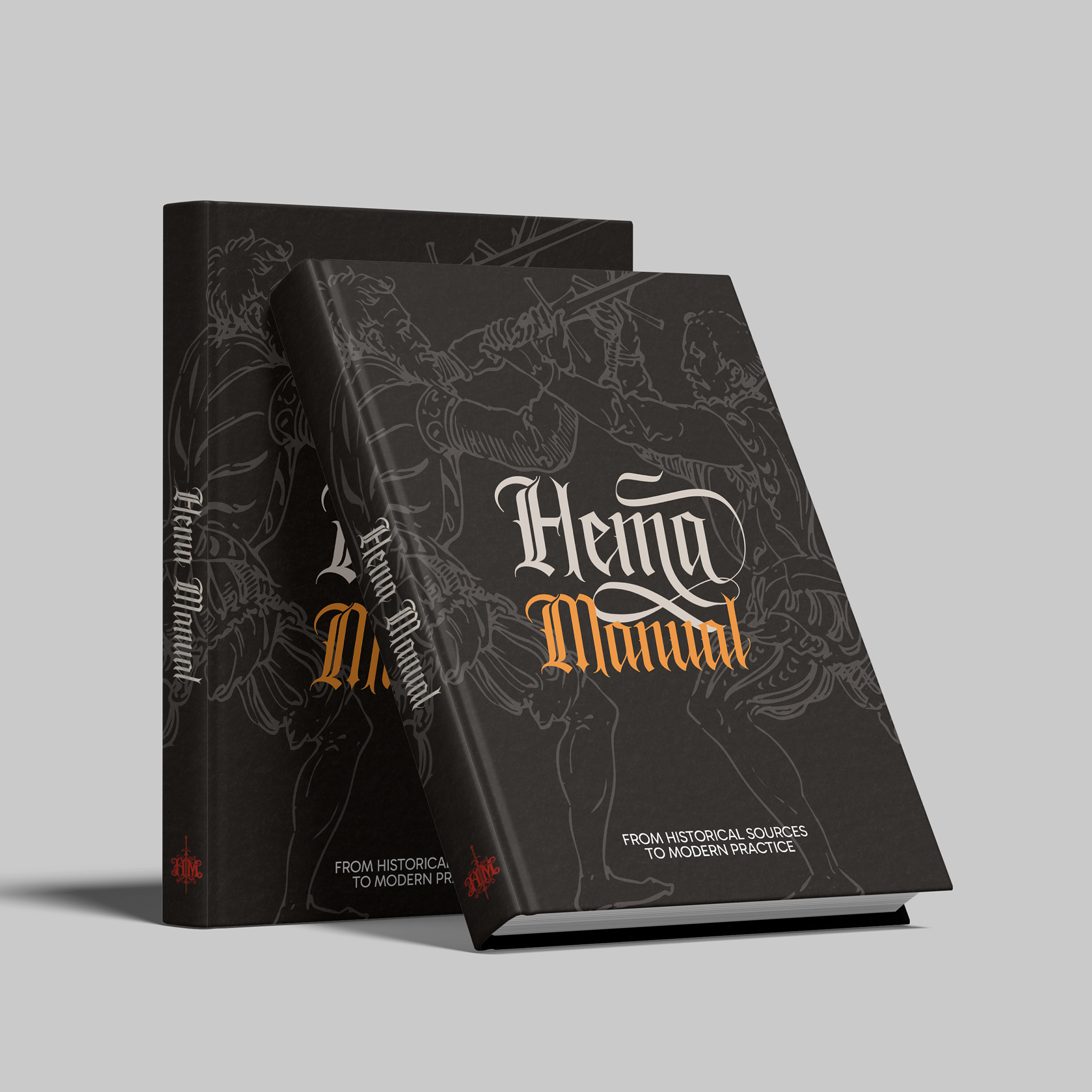
HEMA MANUAL is a comprehensive 220-page guide to modern Historical European Martial Arts (HEMA). Covering historical sources, weapon systems, protective equipment, tournaments, clubs, community, and training culture, it provides beginners and experienced practitioners alike with a structured introduction to the world of HEMA.
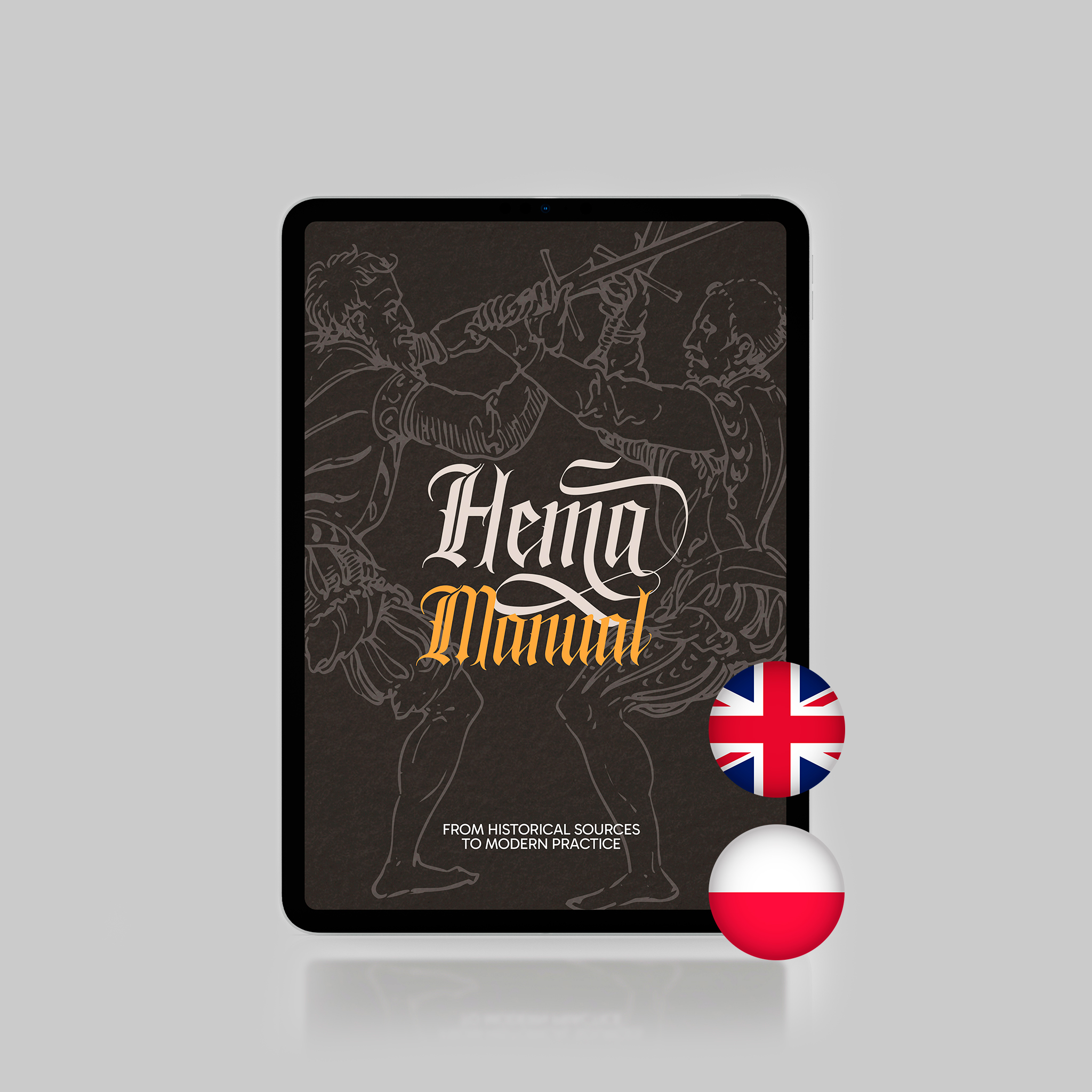
HEMA MANUAL PDF is a comprehensive 220-page guide to modern Historical European Martial Arts (HEMA). Covering historical sources, weapon systems, protective equipment, tournaments, clubs, community, and training culture. The PDF will be available in both Polish and English language versions.
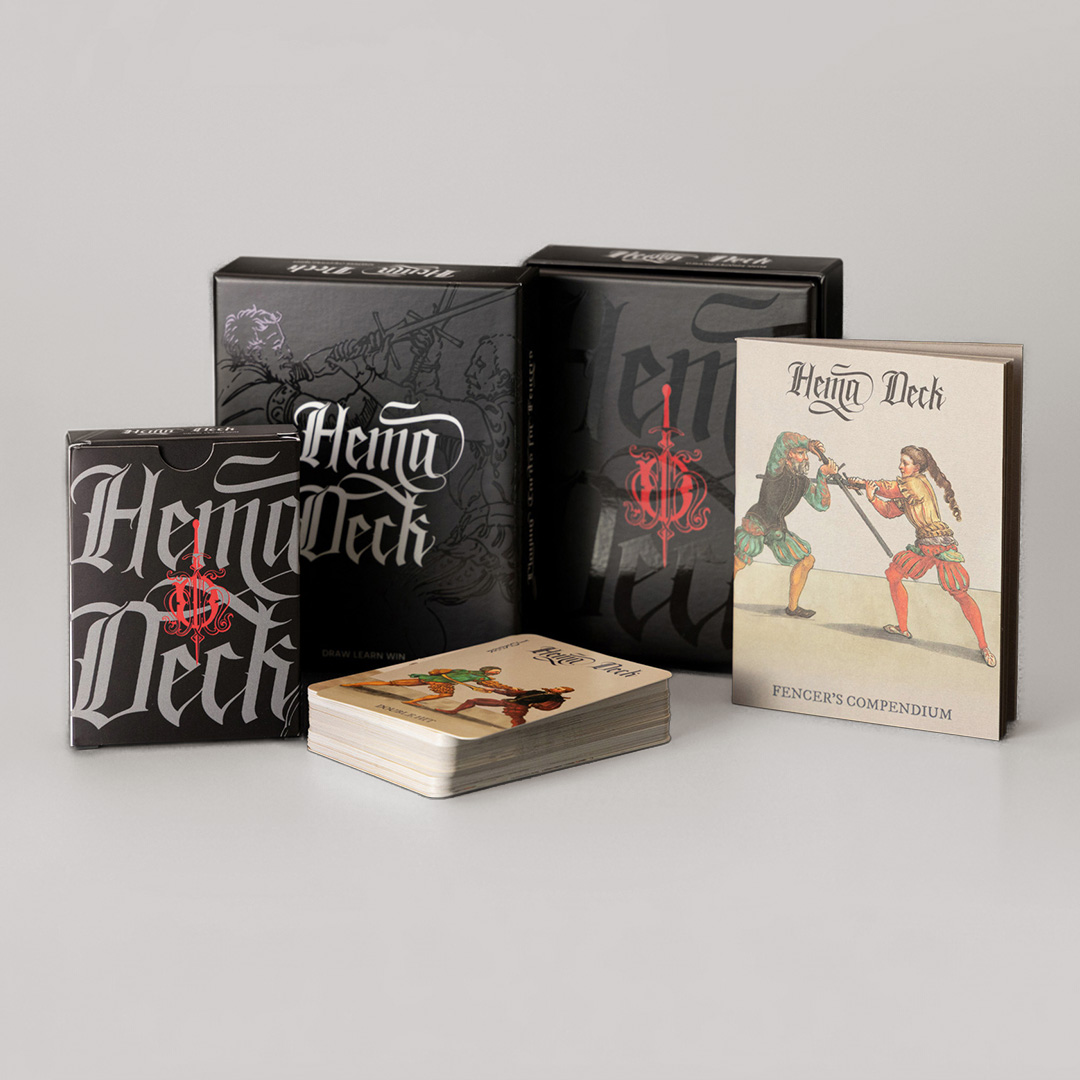
HEMA DECK is a unique educational card deck inspired by Historical European Martial Arts (HEMA). Featuring 55 illustrated cards and a 48-page booklet, it introduces the fundamental guards, techniques, weapons, and concepts of four core HEMA disciplines: longsword, rapier, sabre, and sword & buckler.
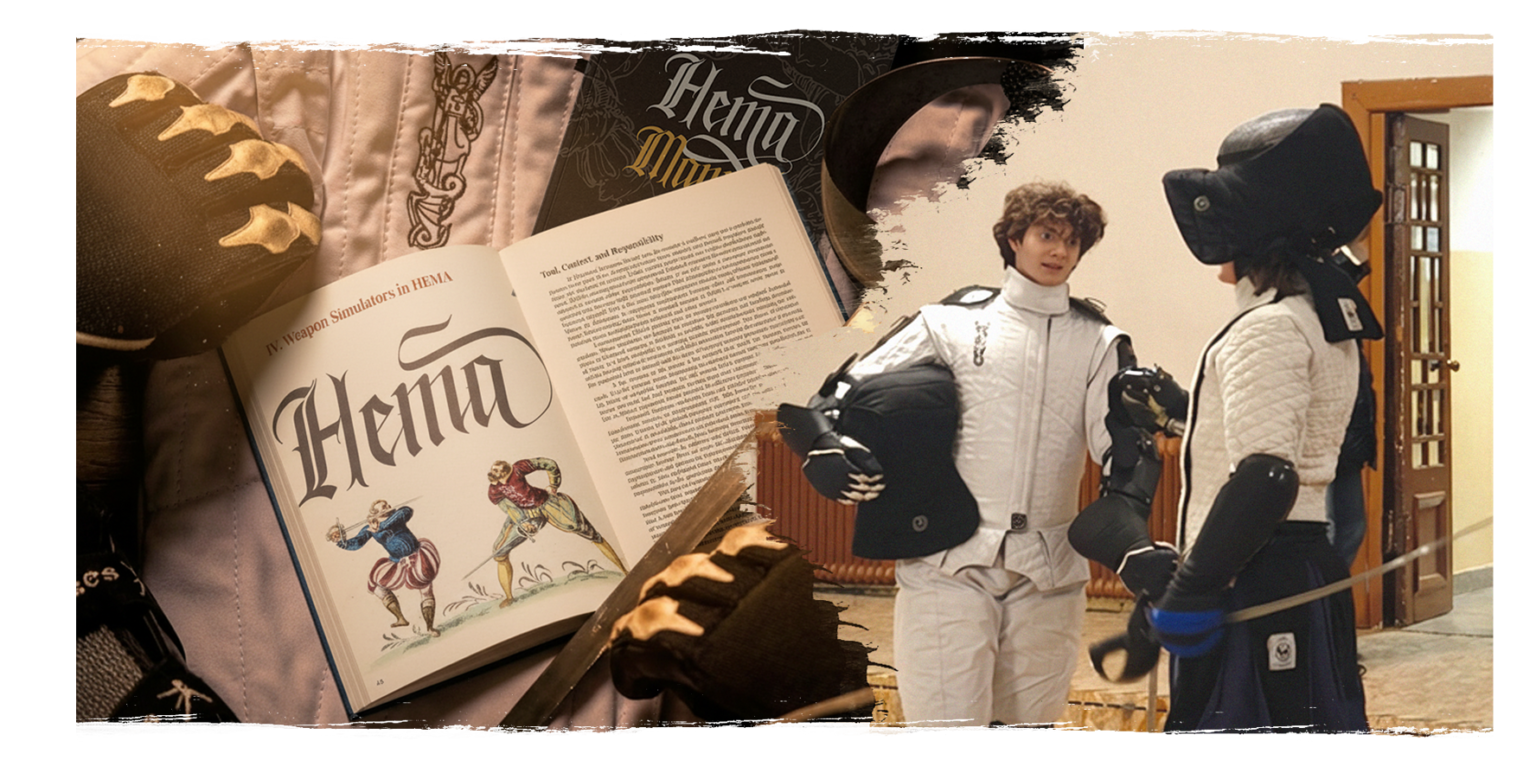
Entering the world of HEMA, most people encounter the same experience sooner or later: an overwhelming number of questions, unfamiliar terms, and seemingly contradictory information. What exactly is HEMA? How is it different from reenactment or Olympic fencing? Which weapon should you start with? How do you find a club? What equipment do you really need? Why do different schools train differently, and how should historical sources be approached?
If you meet experienced and supportive people, they can help guide you through this maze. But often, newcomers must navigate it on their own, piecing together information from books, videos, online discussions, training sessions, and conversations until it begins to form a coherent picture.
HEMA MANUAL was created to make that journey easier, bringing together the essential knowledge, context, and practical guidance needed to understand modern HEMA. It provides a structured introduction to its history, weapons, equipment, clubs, competitions, and community, helping readers build a solid foundation for further development.
The inspiration for HEMA MANUAL came directly from my own early experiences. At the time, there was no single place that calmly and clearly explained what HEMA is, how its equipment and organisational structures work, and why context plays such a crucial role. The information existed — in historical treatises, online resources, and discussions with more experienced practitioners — but it was scattered and often difficult to connect into a larger picture.
The second impulse behind this book was the success of the HEMA DECK project, which was successfully funded on Kickstarter thanks to the support of the HEMA community. That project demonstrated a genuine interest in thoughtful, well-designed educational tools within the HEMA world.
HEMA MANUAL grows directly out of that experience and represents its natural continuation. It is an attempt to gather knowledge, experience, and perspective into an orientation guide — a book meant to help readers navigate the world of HEMA more consciously, regardless of where they are on their personal journey.


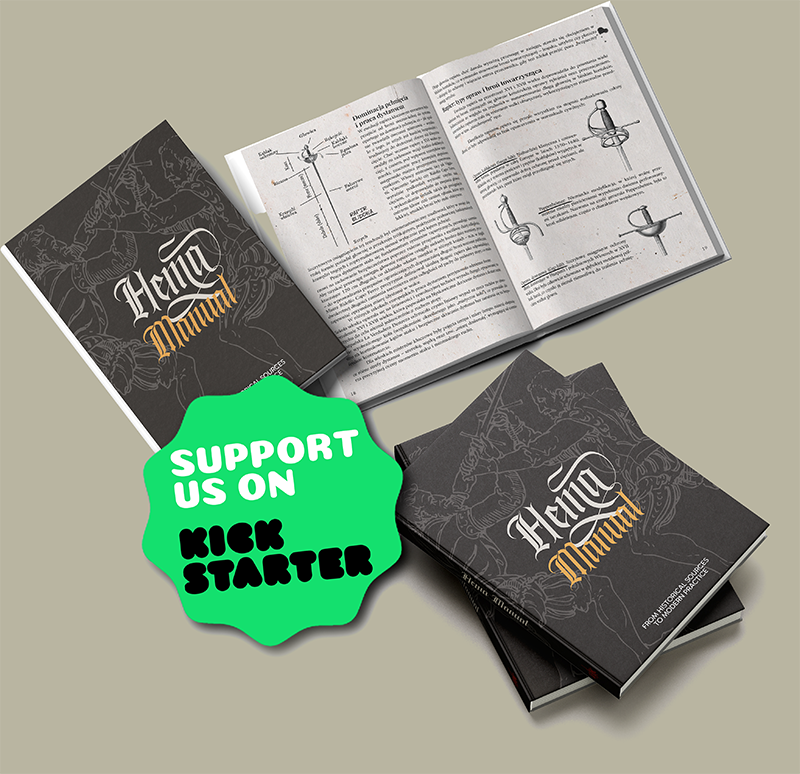
HEMA MANUAL is published in a B5 format (170 × 240 mm), providing ample space for clear layouts, detailed illustrations, and comfortable reading. The book contains 220 full-color pages and is bound in a durable thread-sewn hardcover designed for long-term use and frequent reference.
The interior is printed on high-quality 115 g paper, ensuring excellent readability and visual consistency throughout the publication. The cover features an anti-scratch laminate with selective spot varnish, enhancing both durability and presentation. A red ribbon bookmark and matching red headband complete the binding.
The book includes more than 100 illustrations, combining historical artwork, source material, diagrams, and original graphics created specifically for HEMA MANUAL.
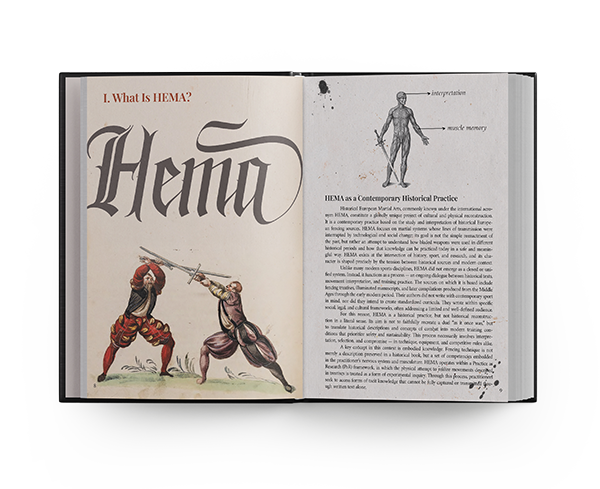
An introduction to Historical European Martial Arts as a contemporary historical practice. This chapter explains what HEMA is — and what it is not — outlining the differences between HEMA, historical reenactment, and sport fencing, as well as the role of safety and historical sources in modern practice.
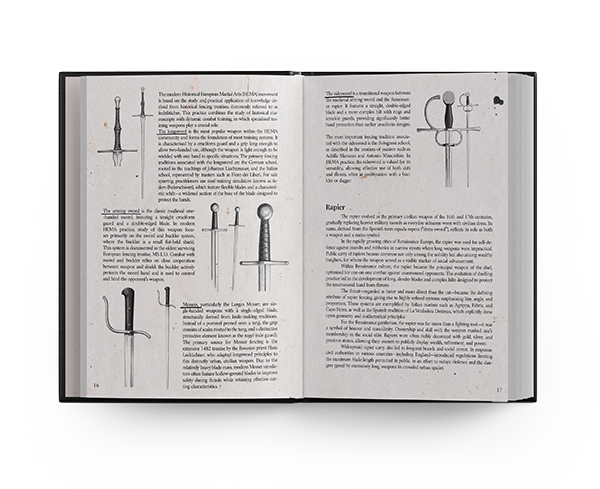
A concise overview of the development of European bladed weapons, with dedicated sections on the sword, rapier, and sabre. This chapter provides historical and cultural context for the weapon systems used in modern HEMA.
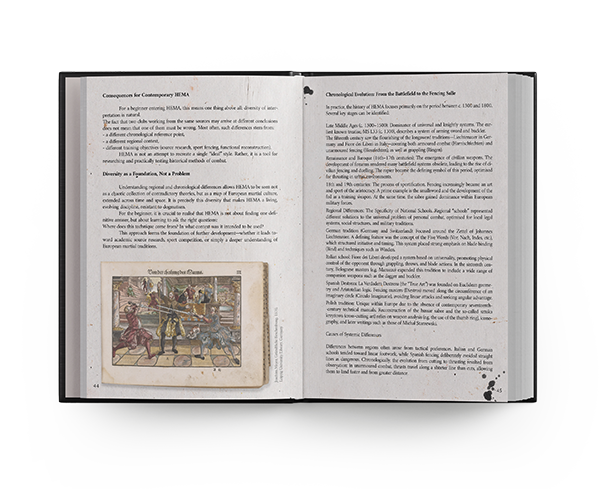
An in-depth look at historical fencing treatises as the foundation of HEMA. The chapter discusses major traditions, historical masters, regional and chronological differences, and the methodological challenges of interpreting sources — from the battlefield to the fencing hall.
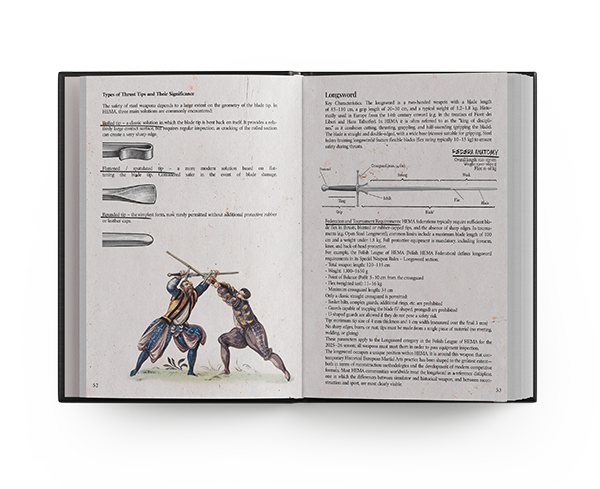
A practical discussion of training tools used in HEMA, including non-steel and steel weapon simulators. This chapter focuses on responsibility, context, and appropriate tool selection across different weapon disciplines.
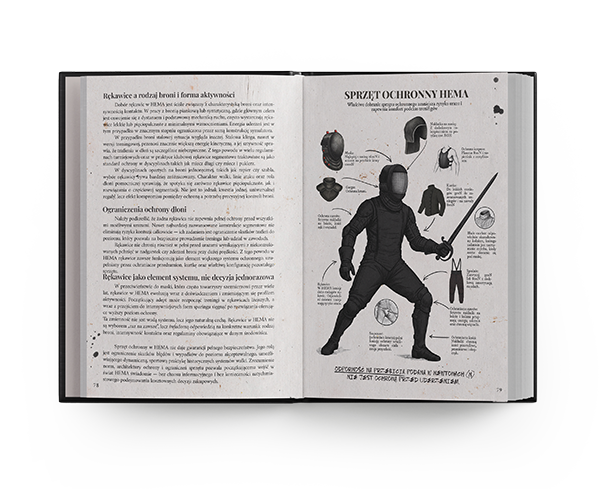
A comprehensive guide to modern HEMA protective equipment. Topics include protection architecture, Newton ratings and safety standards, masks, jackets, gloves, groin and joint protection — explaining how modern safety systems actually work.
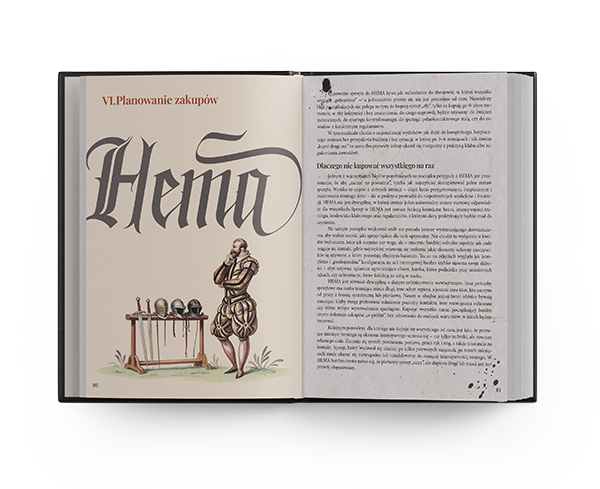
A realistic and experience-based approach to building HEMA equipment over time. This chapter addresses common beginner mistakes, club equipment, staged purchasing strategies, and how to read equipment specifications and descriptions critically.
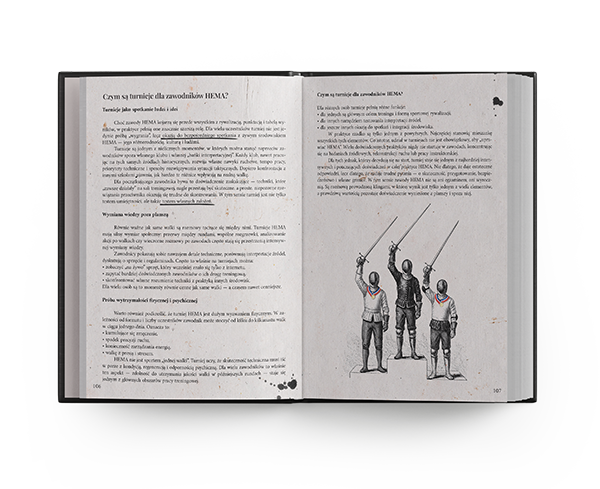
An overview of the social and organisational structure of HEMA. Covers where to look for knowledge, how to find a club, how competitions function, and what tournaments mean for modern HEMA practitioners.
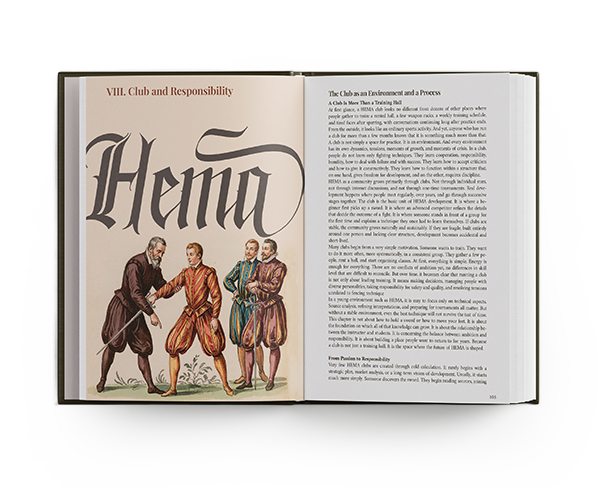
A HEMA club is more than a place to train. It is a community where skills are developed, relationships are built, and a culture of safety, cooperation, and responsibility toward fellow practitioners is shaped.
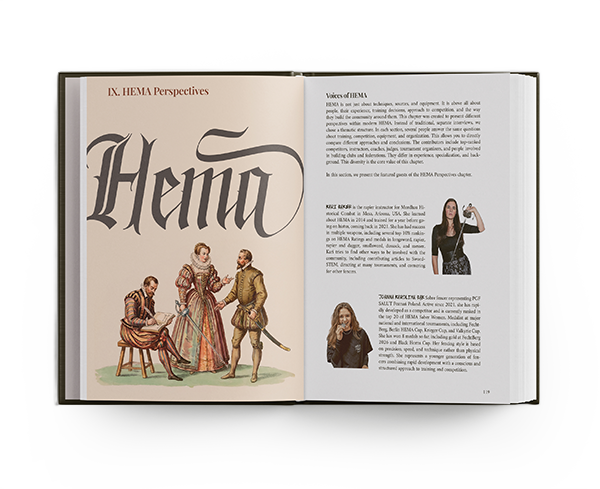
Insights from instructors, competitors, referees, and organizers from different countries, offering a broad view of modern HEMA. Diverse perspectives on training, competition, safety, community building, and the future of this rapidly evolving discipline.
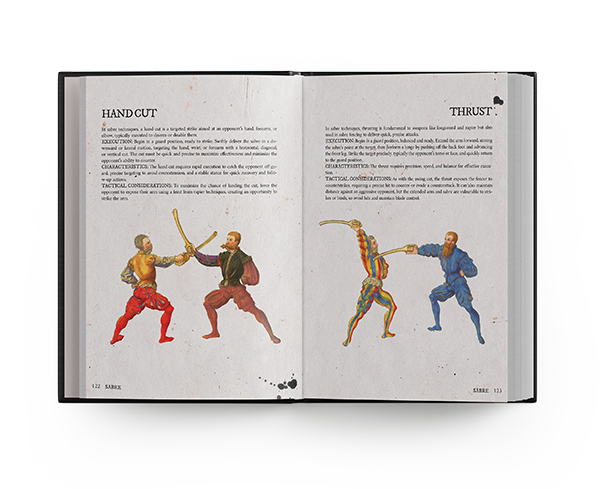
Descriptions of fundamental fencing stances from four core HEMA disciplines: longsword, sabre, rapier, and sword & buckler. These sections are supported by illustrations drawn from historical treatises and artwork inspired by their visual language.
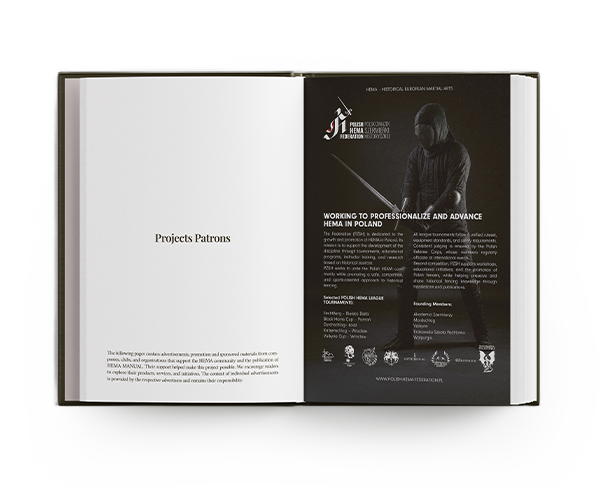
Meet the organizations, companies, clubs, and individuals who helped make HEMA MANUAL possible through their support, partnership, and commitment to the HEMA community.
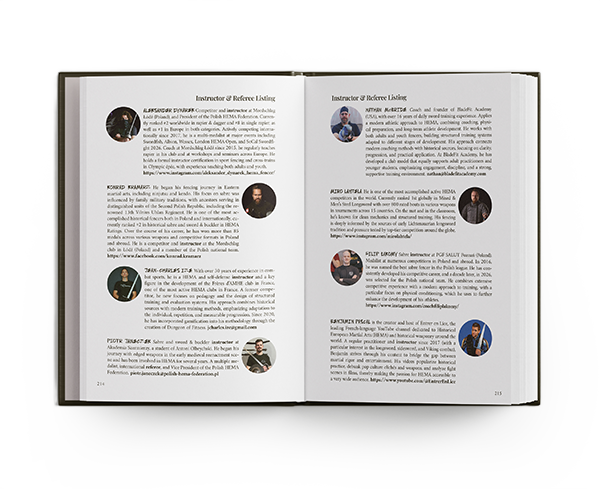
A practical guide to the global HEMA community. Featuring instructors, referees, clubs, tournaments, events, and companies that help shape, support, and develop Historical European Martial Arts around the world.
HEMA MANUAL was successfully funded on Kickstarter, reaching more than 900% of its original funding goal. Earning Kickstarter’s “Project We Love” distinction.
Backed by hundreds of supporters from around the world, the project demonstrated the demand for high-quality educational resources dedicated to Historical European Martial Arts.
What began as an idea grew into a 220-page hardcover publication, made possible by the trust and support of the international HEMA community.


Stark Creations Maks Starkowski, Poland 64-300 Jastrzębsko Stare 28C
mob. +48 501 316 643
NIP 7882044657