
HEMA Perspectives: Voices from the HEMA Community
Historical European Martial Arts brings together people with different backgrounds, goals and approaches to the study and practice of historical fighting systems.
Some focus on interpreting historical sources. Others dedicate themselves to training, competition, teaching or building HEMA clubs and communities. Each of these experiences offers a different way of understanding the discipline.
HEMA Perspectives is the interview and community perspective section of HEMA MANUAL.
It introduces readers to people whose experiences and viewpoints help illustrate the many dimensions of modern HEMA.
The conversations explore questions that matter to practitioners at different stages of their journey, from developing their training and understanding competition to teaching others and creating sustainable clubs.
Explore the people featured in HEMA Perspectives, discover the subjects discussed in their conversations and find out where to explore these topics further in HEMA MANUAL.
TRAINING · COMPETITION
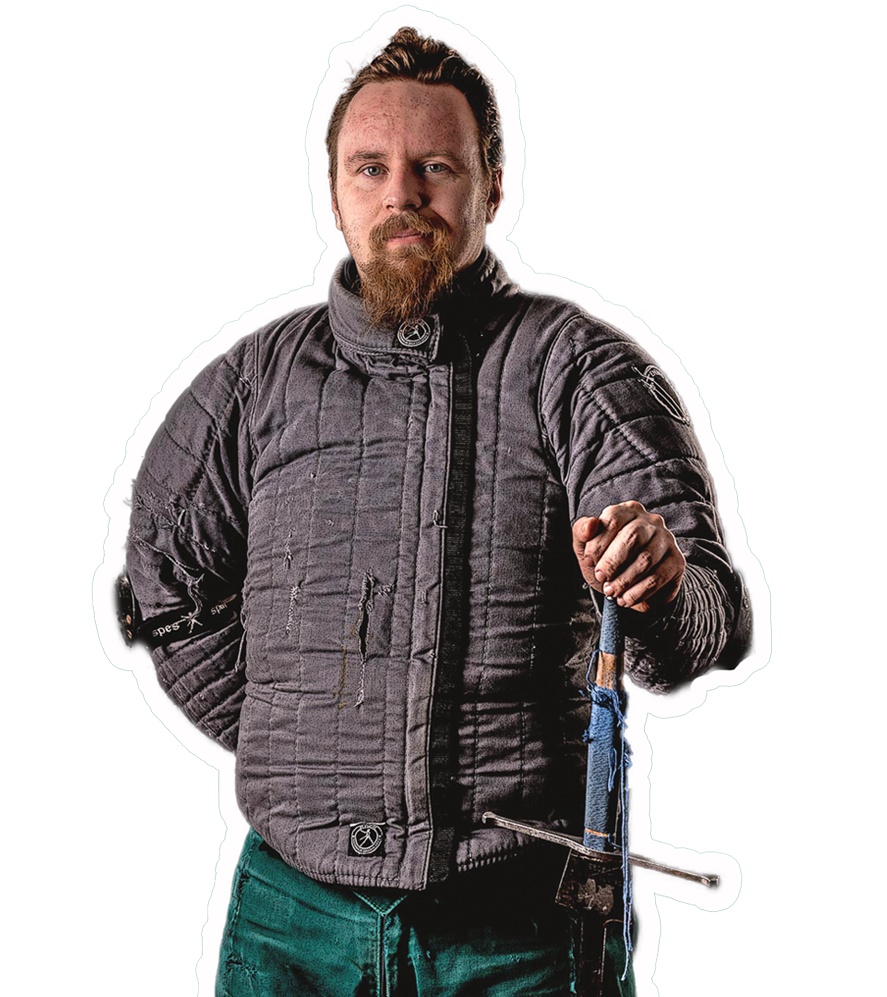
Miro Lahtela
Competitive longsword fencing, structured training and development.
What does your training session typically look like?
“Typically at EHMS a training session is 90 minutes. The first 10-15 minutes is warm ups including some games that relate to the training blocks topic. The next 45-50 minutes …”
What bad habits or mistakes tend to hold a fencer’s development back?
“A lot of fencers tend to not know what their own strength and weakness are…”
— Miro Lahtela
TRAINING · COACHING · CLUB DEVELOPMENT
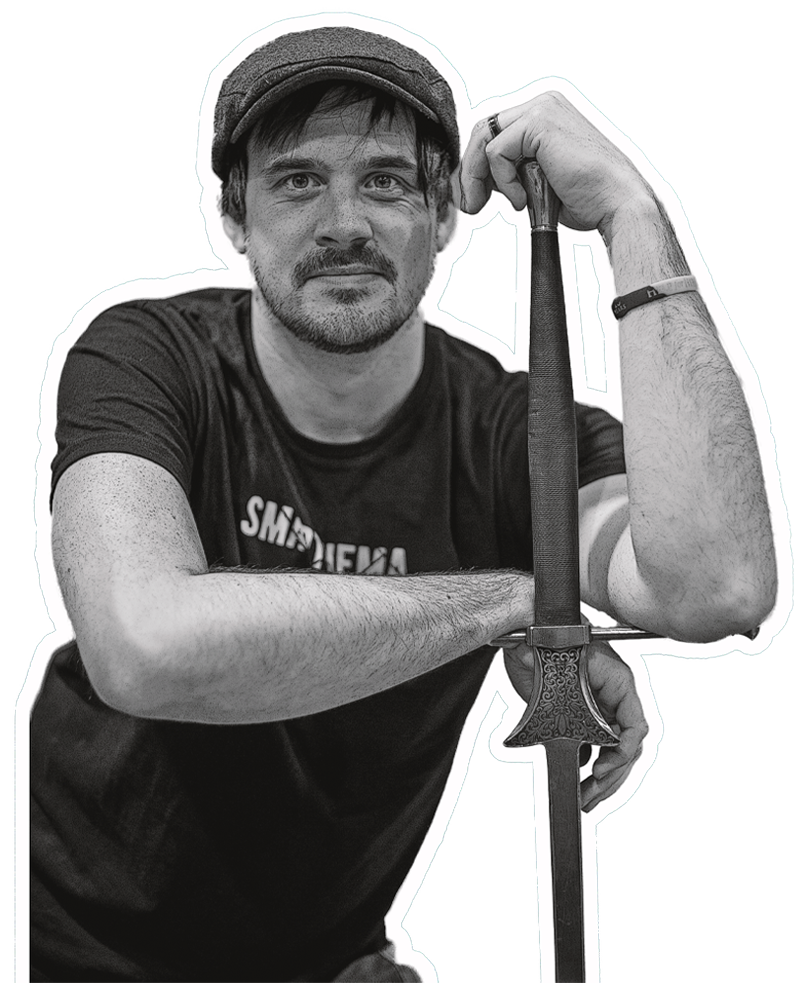
Stuart Smart
An accomplished épéeist and Rapier & Dagger fencer, Stuart Smart combines modern teaching methods and body mechanics with historical fencing. He developed SmartHEMA into one of the UK’s leading HEMA clubs, focusing on structured coaching and competitive performance.
What mistakes do you most often see in HEMA coaching, especially when instructors rely only on tradition instead of modern training methodology?
“My personal philosophy is to ‘distil’ the source and ask myself, ‘what is the master trying to say here? What’s the central idea of the lesson? …’”
What does a good training structure look like for building long-term competitive performance rather than short-term results?
“Long-term competitive performance starts with a solid and measurable base of progression…”
What makes a HEMA club grow and stay strong over the years instead of stagnating?
“In my experience, the best thing for a lasting club is a cast iron core identity…”
— Stuart Smart
SABRE · TRAINING · COMPETITION
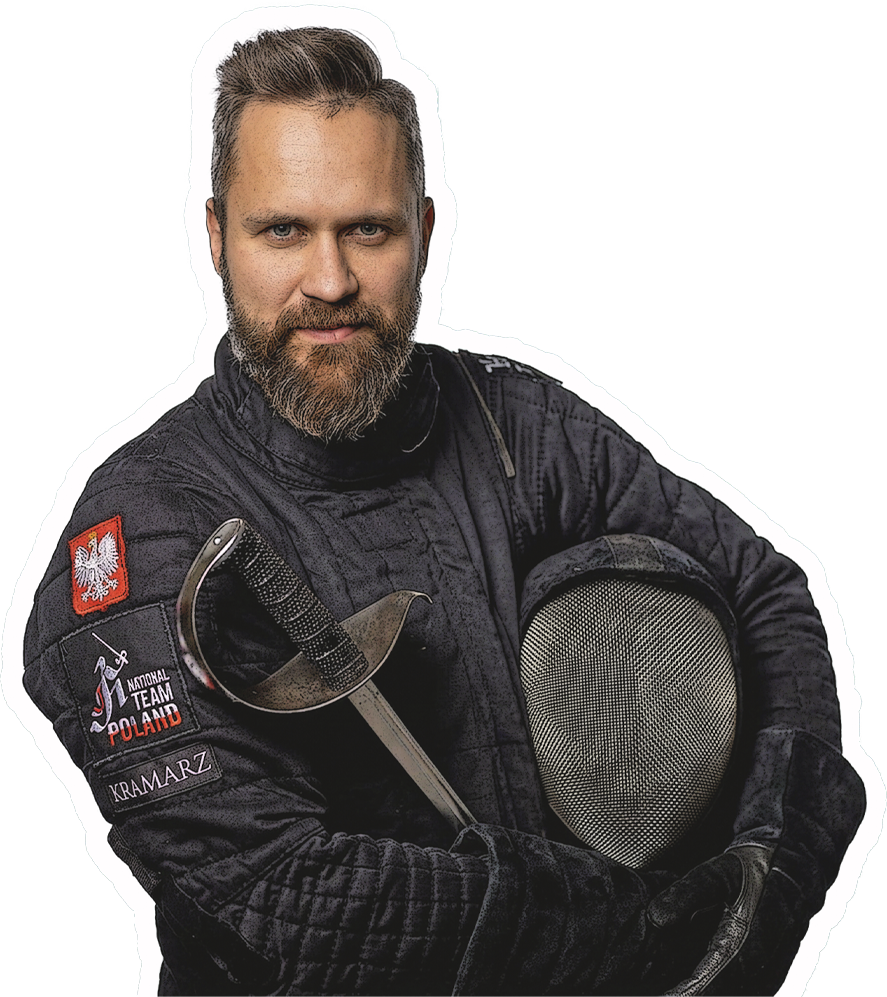
Konrad Kramarz
A highly accomplished historical fencer, instructor at Mordschlag in Łódź, Poland, and member of the Polish national team. With a background in Eastern martial arts and a family history connected to Polish cavalry traditions, Konrad has won more than 85 medals across different weapons and competitive formats.
What does your training session typically look like?
“This allows me to apply, under realistic conditions, as many of the techniques and tactical solutions as possible that I have been developing during the technical portion of training…”
What aspects of training in your specialization are most often overlooked?
“Unfortunately, one of the most neglected aspects of sabre training is proper cutting technique…”
How do you deal with stress and pressure?
“There are many different approaches, methods, and schools of thought. For me, the best way to deal with pressure is simple: …”
— Konrad Kramarz
COMMUNITY · MEDIA · THE FUTURE OF HEMA
Benjamin Pascal
Creator and host of Entrer en Lice, a leading French-language YouTube channel dedicated to HEMA and historical weaponry, Benjamin Pascal combines martial practice with accessible, engaging content. Through his videos on historical weapons, popular culture and fight scenes in films, he helps introduce HEMA to a wider audience.
What mistakes do beginners make most often? What slows down the development of beginners the most?
“The most common mistake is to completely neglect upper- and lower-body coordination and footwork…”
What makes a HEMA club grow and keep people engaged long-term instead of stagnating?
“It’s important for a club to have a strong, proactive core group, without the whole dynamic resting on a single person…”
What role do media, YouTube, and online content play today in attracting new people into HEMA?
“I can certainly confirm that my efforts on social media have successfully attracted many new members to our French federation…”
How do you see the future of HEMA? What changes may have the biggest impact on its development in the coming years?
“HEMA needs to forge links with a proper sports federation whilst retaining as much independence as possible…”
— Benjamin Pascal

HEMA Perspectives: Insights from the People Shaping Historical European Martial Arts
Learn from the experience of HEMA fencers, coaches, competitors, researchers, and community builders from around the world.
Historical European Martial Arts (HEMA) is much more than the study of historical fencing manuals or the practice of fighting with swords. It is a diverse, evolving community shaped by the people who train, teach, compete, research historical sources, organise events, and share their knowledge with others.
HEMA Perspectives brings these voices together in one place. Through interviews with practitioners from different backgrounds and specialisations, this chapter of HEMA MANUAL explores the real experiences, challenges, and ideas behind modern HEMA. It offers practical insights into training and competition, technical development, coaching, club culture, historical interpretation, media, and the future of the discipline.
Rather than presenting a single approach as the right one, HEMA Perspectives highlights the diversity of experience that makes historical European martial arts such a dynamic field. Whether you are new to HEMA, an experienced tournament fencer, an instructor, a researcher, or someone helping to build the community, these conversations offer new perspectives to consider and ideas to bring into your own practice.
Meet the People Behind HEMA Perspectives
The chapter features voices including Joanna Karolina Bąk, Aleksander Dynarek, Kari Baker, Jean-Charles Izé, Piotr Janeczek, Konrad Kramarz, Miro Lahtela, Filip Łakomy, Nathan McBride, Szymon Ożóg, Stuart Smart, Benjamin Pascal, Tosca Aerts-Beuming, and Michele Allori, bringing together different experiences and viewpoints from the HEMA world.
Their perspectives touch on some of the questions that matter most to practitioners:
Training and technical development — how to structure training, improve fencing skills, recognise common mistakes, and turn technical practice into effective performance.
Competition and performance under pressure — how fencers approach preparation, tactical decisions, stress, setbacks, and the challenge of testing their skills against other practitioners.
Coaching and teaching — how instructors can communicate historical techniques, support beginners, and help students progress over time.
Historical sources and practical fencing — how practitioners interpret historical fencing treatises and connect research with training and sparring.
Clubs and community building — what helps HEMA clubs grow, retain members, create a positive culture, and develop beyond the efforts of a single individual.
Media, outreach, and the future of HEMA — how videos, online platforms, events, and collaboration can introduce more people to historical martial arts and support the discipline’s continued development.
More Than Techniques: A Look Inside the HEMA Community
One of the most valuable aspects of HEMA is that there is no single path to becoming a better practitioner. Competitive fencing, historical research, coaching, recreational training, and community work all contribute to the development of the discipline.
The experiences shared in HEMA Perspectives show how these different areas connect. A technical question can lead to a discussion about training methods; a competition experience can reveal the importance of preparation and mindset; and a conversation about running a club can open up broader questions about leadership, inclusion, and long-term sustainability.
These are not simply abstract discussions. They are grounded in the experiences of people who actively participate in HEMA and understand the practical realities of training, teaching, competing, and working with others.
For Beginners, Experienced Fencers, and Instructors
If you are just starting your HEMA journey, these interviews can help you understand what to expect, what challenges you may encounter, and how different practitioners approach learning and improvement.
If you already train regularly or compete, they offer opportunities to reconsider familiar habits, compare training philosophies, and learn from experiences outside your own club or weapon specialisation.
For instructors, club organisers, and other contributors to the HEMA community, the chapter also raises questions about teaching, leadership, communication, and the conditions that help people remain involved in the discipline.
HEMA Perspectives is an invitation to learn from one another. By bringing different experiences into the same conversation, it encourages curiosity, critical thinking, and an open exchange of ideas across the international HEMA community.
Discover the people, experiences, and ideas behind modern Historical European Martial Arts in HEMA MANUAL.