In this article: Discover the role of historical treatises in Historical European Martial Arts, why they are the foundation of HEMA, and why reading them alone is not enough to learn fencing. Understand how historical sources, practical training, and interpretation work together in modern HEMA.
Do You Need to Read Historical Treatises to Practice HEMA?
One of the questions many beginners ask after discovering Historical European Martial Arts is whether they need to start reading historical fencing treatises immediately. After all, HEMA is based on surviving manuscripts written by historical fencing masters. If those texts are the foundation of the discipline, shouldn’t every practitioner begin there?
The answer is both yes and no.
Historical treatises are at the heart of HEMA, but they were never intended to function as modern training manuals. They provide the foundation for understanding European martial traditions, yet learning to fence requires much more than reading historical texts.
Historical Treatises Are the Foundation of HEMA
Unlike many martial arts that have preserved an uninterrupted line of instruction, European martial traditions experienced a break in transmission. Modern HEMA therefore relies on surviving fencing treatises, manuscripts, and illustrated fight books created between the fourteenth and nineteenth centuries. These documents are the primary evidence for how historical systems of combat were taught and understood.
For this reason, historical sources occupy a unique position within HEMA. They are not optional reading for specialists. They are the reason the discipline exists at all.
Without them, there would be no historical foundation from which to reconstruct European martial arts.
A Treatise Is Not a Modern Instruction Manual
This often surprises beginners.
Many people imagine opening a historical manuscript and finding step-by-step lessons similar to those in a modern coaching book. Historical treatises rarely work that way.
Their authors wrote for students living in a completely different world. They assumed readers already understood the terminology, the equipment, and the cultural context in which the techniques were used. Descriptions are frequently concise, symbolic, or intentionally cryptic, while illustrations often serve as visual references rather than detailed technical instructions.
Reading a treatise without practical experience can therefore be frustrating. It is a little like trying to learn a language using only a historical dictionary. The words are there, but much of their meaning only becomes clear through use.
Interpretation Is Part of the Process
One of the defining characteristics of modern HEMA is that interpretation is not a flaw in the discipline. It is an unavoidable part of working with historical sources.
Different masters wrote in different centuries, different regions, and for different purposes. Many manuscripts contain gaps, ambiguous descriptions, or concepts that can be understood in more than one way. Practitioners must therefore combine historical research with physical experimentation to explore how techniques may have functioned in practice.
This is one reason why different clubs sometimes teach the same source in slightly different ways. These differences do not necessarily mean that one interpretation is correct and another is wrong. They often reflect the ongoing process of testing historical ideas through modern training.
Fencing Is Learned Through Practice
Historical texts can explain concepts, describe positions, and preserve the ideas of past masters.
What they cannot do is teach balance, timing, distance, pressure, or the feeling of another person’s blade.
HEMA relies on what researchers often describe as embodied knowledge, skills that develop through movement, repetition, and direct interaction with training partners. No matter how carefully a source is written, it cannot replace regular practice under the guidance of experienced instructors.
Reading and training are not competing activities. They complement one another.
The source provides the historical framework.
Training gives that framework physical meaning.
Beginners Shouldn’t Feel Pressured
Many newcomers worry that they need to understand Liechtenauer, Fiore, Meyer, or other historical masters before attending their first class.
In reality, most clubs introduce historical sources gradually as students gain practical experience.
Learning fundamental movement, developing safe training habits, and understanding basic concepts usually come first. As practitioners become more confident, historical texts become increasingly valuable because they begin to connect with experiences already developed in the training hall.
The treatise has not changed.
The reader has.
Historical Sources Are Only One Part of Learning
Modern HEMA draws knowledge from several interconnected places.
Historical manuscripts remain the foundation, but they are supported by experienced instructors, regular club training, seminars, discussions with other practitioners, digital archives, and careful analysis of different interpretations. Even videos and online resources are most useful when treated as supplements rather than replacements for practical training.
Understanding HEMA means learning to combine these different sources of knowledge rather than relying on only one of them.
Reading Is the Beginning, Not the Destination
So, do you need to read historical treatises to practice HEMA?
Eventually, yes.
But you do not need to become a medieval scholar before picking up a training sword.
Historical treatises provide the direction. Your club provides guidance. Training transforms historical ideas into practical skill.
It is the combination of all three that defines modern Historical European Martial Arts.
Learn More
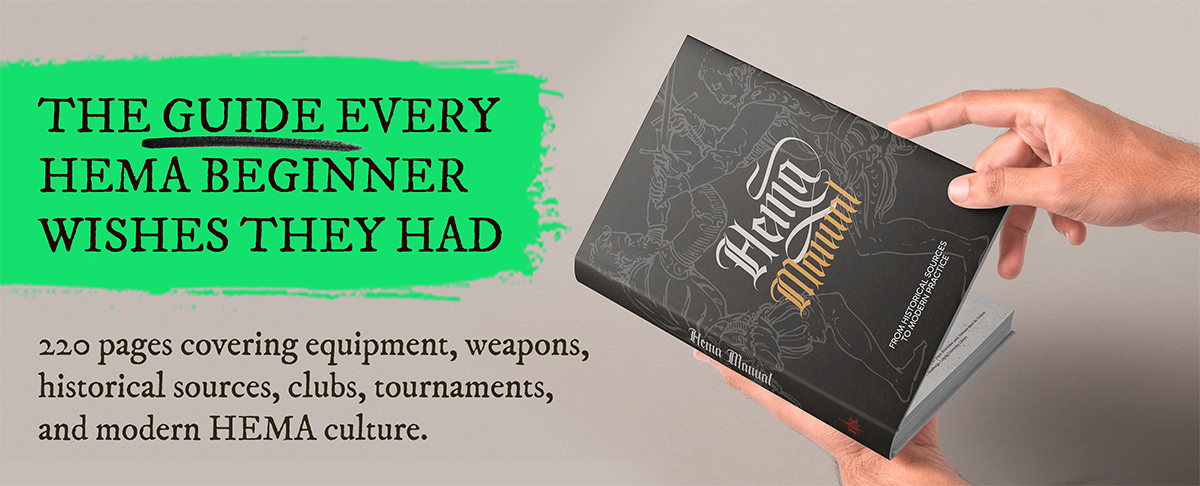
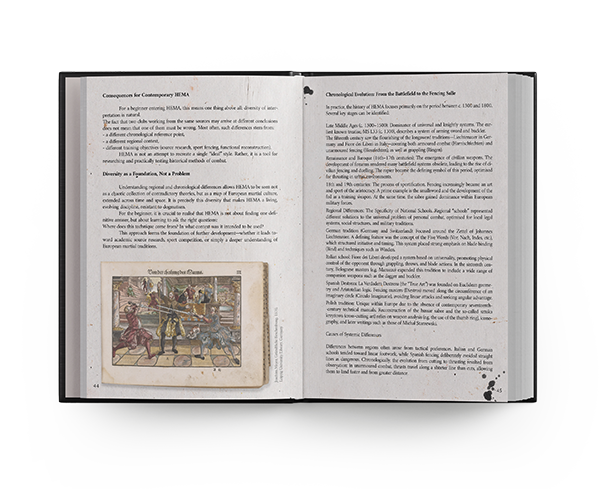
HEMA MANUAL explores the historical sources behind modern HEMA, explains why interpretation is essential, introduces the major fencing traditions and masters, and shows how historical texts, practical training, and club experience work together to create a meaningful path of learning.