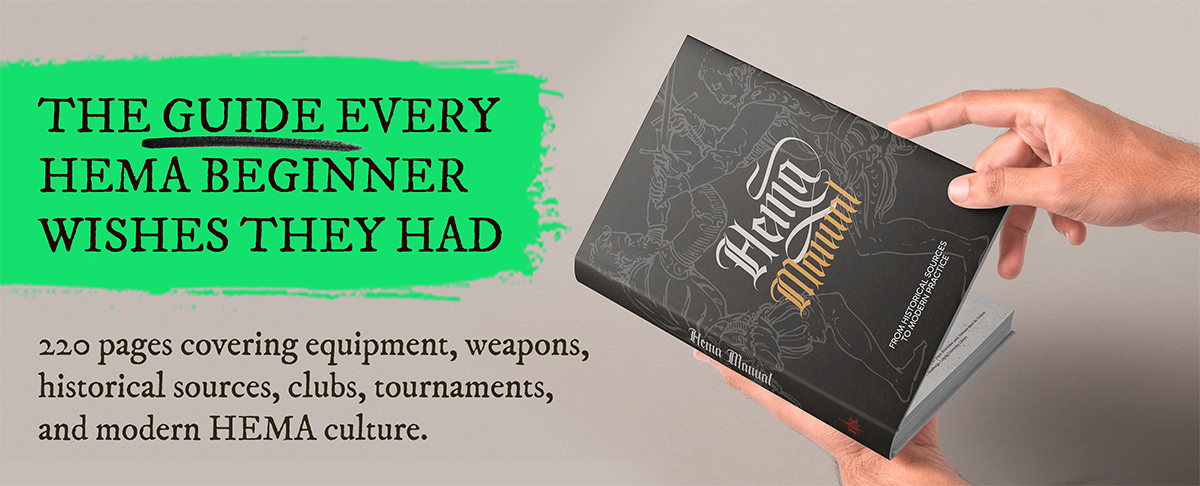
In this article: Meet the 15 HEMA practitioners, instructors, coaches, referees, organizers, and community leaders featured in HEMA MANUAL’s HEMA Perspectives chapter. Discover their different approaches to training, competition, equipment, coaching, clubs, and the future of Historical European Martial Arts.
HEMA Is Built by People
Historical European Martial Arts is often described through its weapons, historical sources, fencing traditions, and tournaments. But behind all of these elements are people. Practitioners make decisions about how they train, instructors decide how knowledge should be taught, competitors test their skills under pressure, organizers create events, and community leaders help shape the environment in which HEMA develops.
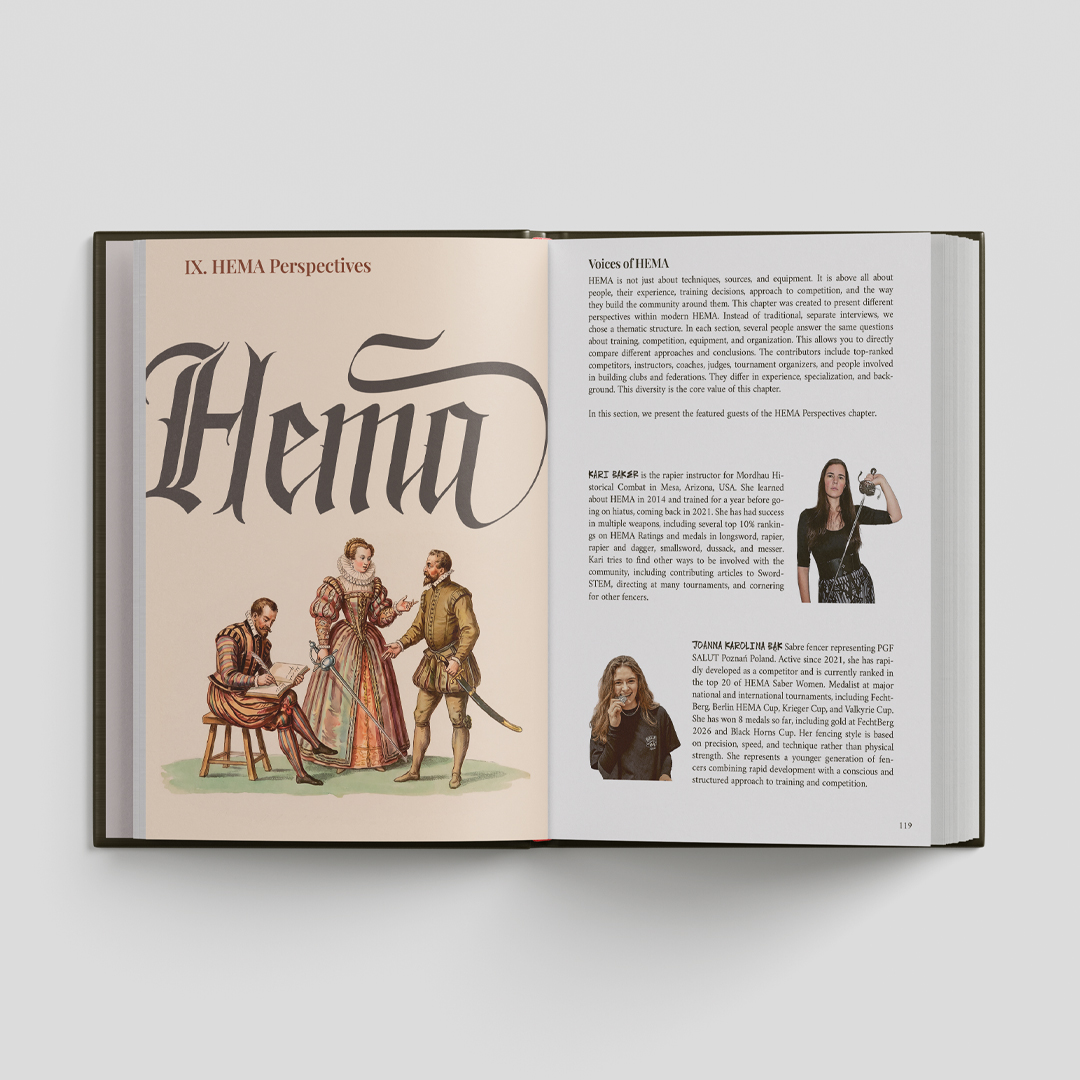
This is the idea behind HEMA Perspectives, one of the most distinctive chapters of HEMA MANUAL.
Instead of presenting a series of isolated interviews, the chapter takes a thematic approach. Different people answer the same questions about training, competition, equipment, teaching, clubs, events, and the future of HEMA. This makes it possible to compare experiences and opinions directly rather than presenting a single definition of how HEMA should be practiced.
The result is a picture of modern HEMA that is necessarily diverse. There is no single path through Historical European Martial Arts, and the people featured in the chapter demonstrate exactly why.
Kari Baker
Kari Baker is a rapier instructor at Mordhau Historical Combat in Mesa, Arizona, USA. She first encountered HEMA in 2014, returned to active training in 2021, and has since achieved strong results across several weapon systems. Her experience includes longsword, rapier, rapier and buckler, smallsword, dussack, and messer, with multiple appearances among the top 10% of HEMA Ratings competitors.
Her involvement extends beyond competition. Kari contributes articles to SwordSTEM, works as a head referee and ring manager at tournaments, and supports other competitors during events. Her perspective therefore connects competitive fencing with instruction, officiating, and community development.
Joanna Karolina Bąk
Joanna Karolina Bąk represents PGF SALUT Poznań and specialises in sabre. She began training HEMA in 2021 and quickly established herself among the leading competitors in her category. She has earned medals at major Polish and international events, including FechtBerg, Berlin HEMA Cup, Krieger Cup, and Valkyrie Cup.
Her approach places particular emphasis on precision, speed, technique, consistency, and understanding personal limits. Her perspective also brings the experience of a younger generation of HEMA competitors who combine competitive development with a conscious and structured approach to training.
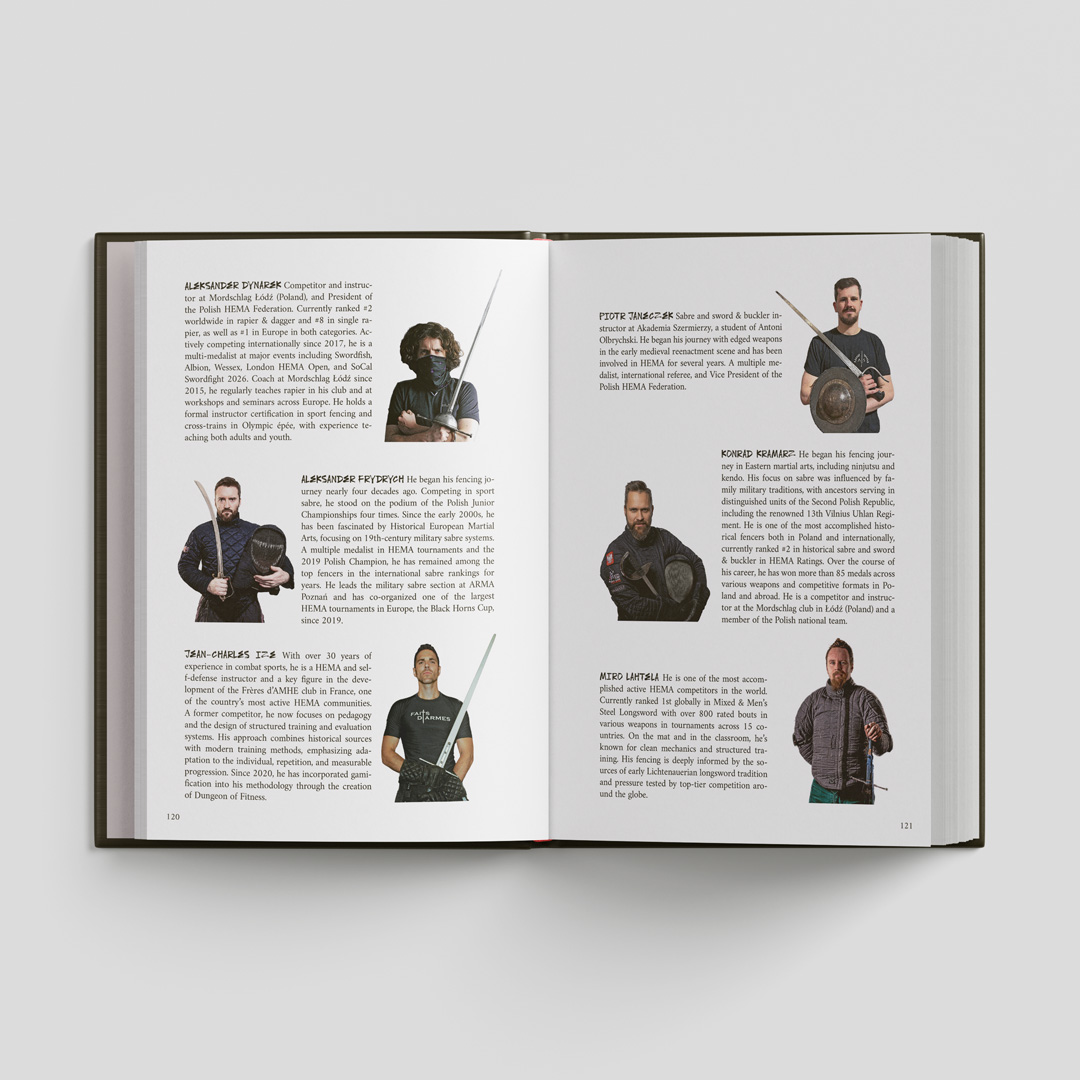
Aleksander Dynarek
Aleksander Dynarek is a competitor and instructor at Mordschlag Łódź and president of the Polish HEMA Federation. He specialises in rapier and rapier and buckler and has competed internationally since 2017, while also teaching rapier and conducting workshops and seminars.
His background combines HEMA competition with formal sports fencing instructor qualifications and experience with the Olympic épée. This gives him a perspective that crosses several parts of modern fencing, from coaching and competition to federation development.
Piotr Janeczek
Piotr Janeczek is an instructor of sabre and sword and buckler at Akademia Szermierzy, a student of Antoni Olbrychski, an international referee, multiple medalist, and vice-president of the Polish HEMA Federation. His journey into historical weapons began through early medieval historical reenactment before moving into HEMA.
His experience brings together training, competition, judging, and organizational work. This is particularly valuable when discussing the realities of tournaments and the role of referees in modern HEMA.
Miro Lahtela
Miro Lahtela is one of the most successful active HEMA competitors in the world. At the time covered by the book, he held the number one position in the world rankings for Mixed Steel Longsword and Men’s Steel Longsword, with more than 800 ranked bouts across tournaments in 15 countries.
His approach is strongly focused on clean movement mechanics, structured training, and solid fundamentals. His fencing is based on the early longsword tradition associated with Johannes Liechtenauer, while his interpretations are continuously tested through international competition.
Jean-Charles Ize
Jean-Charles Ize has more than 30 years of experience in combat sports and is a HEMA and self-defence instructor associated with Frères d’AMHE in France. A former competitor, he now focuses heavily on pedagogy, structured training systems, and measuring student development.
His approach combines historical sources with modern training methodology, individualisation, repetition, and measurable progress. He also developed the Dungeon of Fitness project, incorporating elements of gamification into training.
Nathan McBride
Nathan McBride is the coach and founder of BladeFit Academy in the United States. With more than 16 years of daily weapons training experience, he combines modern sports coaching, physical preparation, and long-term athlete development.
His work includes both adults and younger fencers, with structured training systems adapted to different stages of development. His perspective is particularly relevant to questions about coaching, youth development, discipline, and building a supportive training environment.
Konrad Kramarz
Konrad Kramarz began his fencing journey through Eastern martial arts, including ninjutsu and kendo, before developing a strong interest in sabre. His interest in the weapon is also connected to his family’s military history.
He is one of the most decorated historical fencers in Poland and internationally, with more than 85 medals across different competitions and formats. He specialises in historical sabre and sword and buckler and is a competitor and instructor at Mordschlag Łódź.
Filip Łakomy
Filip Łakomy is the head sabre coach at PGF SALUT and a medalist at competitions in Poland and abroad. He was named the best sabre fencer in the Polish league in 2016 and was selected for the national team in 2026.
His additional specialisation is physical preparation, which he uses alongside his competitive experience to develop athletes. His answers in HEMA Perspectives therefore offer an especially practical view of coaching, athletic preparation, injury prevention, and competitive development.
Szymon Ożóg
Szymon Ożóg is vice-president of the Polish HEMA Federation, owner of Poker Armory, an HEMA weapon manufacturer, and organizer of FechtBerg, one of the largest historical fencing tournaments in Poland and Europe.
He is also a ranked longsword competitor and experienced head referee. His perspective adds something different to the chapter: the organizational and logistical side of HEMA, including tournament planning, judging, equipment, and the responsibilities involved in creating large-scale events.
Michele Allori
Michele Allori began his involvement with historical martial arts through historical reenactment in 2013 before joining HEMA at Frascati Scherma. He has trained several weapon systems, including sword and buckler, spear, and longsword, which remains his main speciality.
He is a co-founder of Res Martialis HEMA Club, a multiple HEMA tournament medalist, and the founder and designer of the Italian HEMA brand Duellatorum. His experience therefore connects competition, club development, equipment design, and the practical realities of modern HEMA.
Benjamin Pascal
Benjamin Pascal is the creator and host of Entrer en Lice, described in HEMA MANUAL as the largest French-language YouTube channel dedicated to HEMA and historical weapons. He has trained and taught HEMA since 2017, with particular interests in longsword, sidesword, and Viking combat reconstruction.
His work focuses on making historical martial arts accessible to a wider audience, challenging popular myths about weapons, and analysing fight scenes from films and television. His perspective highlights the role of media, communication, and public outreach in the development of HEMA.
Tosca Aerts-Beuming
Tosca Aerts-Beuming is active on the board of Zwaardkring and co-organises Winterkamp, one of the longest-running HEMA events in Europe. She has been involved in historical fencing since her teenage years and has competed internationally at events including Swordfish, Helsinki Longsword Open, Oslo Penguin Cup, Albion Cup, and Dutch Lions Cup.
Today, her work focuses strongly on training, club management, and community initiatives. She is also involved in events such as Winterkamp, BUTR Cup, and Zuiderslag, supporting cooperation and exchange within the European HEMA community.
Aleksander Frydrych
Aleksander Frydrych began fencing almost four decades ago and previously competed in sport sabre, reaching the podium at the Polish Junior Championships four times. Since the early 2000s, he has focused on Historical European Martial Arts, particularly nineteenth-century military sabre systems.
He is a multiple medalist, Polish champion from 2019, instructor of military sabre at ARMA Poznań, and co-organizer of Black Horns Cup. His perspective is particularly interesting when discussing the relationship between traditional source-based HEMA and increasingly sport-oriented competition.
Stuart Smart
Stuart Smart is an experienced épée fencer and competitor specialising in rapier and rapier and buckler. His approach combines modern teaching methods, biomechanics, sports preparation, and historical fencing.
He developed SmartHEMA into one of the leading HEMA clubs in the United Kingdom. His contribution to HEMA Perspectives is particularly relevant to questions about club identity, coaching, organisational culture, and what allows a HEMA club to remain stable and effective over many years.
Different Paths, One Community
What makes HEMA Perspectives valuable is not that all fifteen contributors agree.
They don’t.
And that is precisely the point.
A competitive fencer may look at tournaments as a way to test technical development. An instructor may see them as one element of a much larger training process. A referee sees the importance of rules, safety, and decision-making. An organizer sees logistics, communication, and responsibility. A club leader thinks about retention and culture, while a manufacturer considers how equipment develops alongside the discipline.
These differences are not necessarily contradictions. They reflect the fact that modern HEMA has developed into a broad environment with many interconnected roles.
The chapter also shows that HEMA’s future is not predetermined. Its development involves questions about professionalisation, competition rules, club culture, equipment, accessibility, media, international cooperation, and the balance between historical practice and modern sport. The contributors approach these questions from very different positions, which makes their combined perspective considerably more useful than a single definition of where HEMA should go.
Why These Perspectives Matter
For someone new to HEMA, the community can initially appear confusing. There are different clubs, weapon systems, tournaments, interpretations of historical sources, training methods, and opinions about what HEMA should become.
There is no single authority that resolves all of these questions.
That is why understanding different perspectives is so important.
HEMA MANUAL does not attempt to tell the reader which school, interpretation, training method, or competitive philosophy is the correct one. Instead, HEMA Perspectives shows the people behind the discipline and allows their experiences to stand next to one another.
The result is not a single answer to the question of what HEMA is.
It is a clearer picture of what HEMA has become.
Learn More
HEMA Perspectives is one of the chapters of HEMA MANUAL dedicated entirely to the people shaping modern Historical European Martial Arts. Through the experiences of 15 practitioners from different countries and backgrounds, the chapter explores HEMA training, competition, coaching, equipment, clubs, events, community, and the future of the discipline.
HEMA MANUAL is a 220-page hardcover guide to modern Historical European Martial Arts, created as an orientation guide to the history, equipment, training environment, competition, clubs, and wider HEMA community.