In this article: Learn what equipment you actually need for your first HEMA training session, why buying a sword is rarely the best first purchase, how experienced practitioners approach equipment planning, and what beginners should consider before investing in protective gear.
You Need Less Than You Think
One of the first surprises many newcomers encounter is that getting started in Historical European Martial Arts (HEMA) is often much easier than they expected. After watching tournament footage, sparring videos, or event photos, it’s easy to assume that you need a steel sword, a full protective kit, and a significant budget before stepping onto the training floor. In reality, most HEMA clubs understand that beginners are still exploring the discipline and often provide loaner equipment during the first weeks or even months of training. For your first class, comfortable sports clothing, indoor training shoes, and a willingness to learn are usually all you need.
Why Buying a Sword First Is Often a Mistake
The temptation to immediately purchase your first sword is completely understandable. Historical weapons are fascinating, and many people begin browsing equipment stores before attending a single training session. However, experienced HEMA practitioners often give exactly the opposite advice: don’t buy a sword first. The reason is simple. At the beginning of your journey, you don’t yet know what kind of fencer you want to become.
You may be convinced that longsword is your weapon of choice, only to discover a few weeks later that sabre, rapier, or sword and buckler suits your interests far better. You may join a club that follows a particular tradition, training methodology, or equipment standard that differs from your expectations. A purchase that seemed obvious on day one can quickly become an expensive lesson. Before investing in a weapon simulator, spend some time understanding your training environment, your goals, and the discipline you want to pursue.
Training First, Equipment Second
Most experienced instructors recommend a different approach: invest in training before investing heavily in equipment. Attend classes. Learn how your club operates. Borrow equipment when possible. Ask questions. Observe what experienced practitioners use and, more importantly, why they use it. Over time, you’ll discover that building a HEMA kit is not about buying everything at once. It’s a gradual process shaped by your training frequency, weapon system, competitive ambitions, and personal preferences. For most practitioners, protective equipment becomes the first priority, while weapon simulators and more specialised gear are added as experience grows.
There Is No Universal Shopping List
One of the most common beginner misconceptions is the belief that there is a single “perfect” equipment list for everyone. HEMA is simply too diverse for that. The needs of a longsword competitor may differ significantly from those of a rapier specialist or someone focused on historical sabre. Different clubs, tournaments, and training environments may also have different requirements regarding safety equipment and weapon simulators. The best equipment is rarely the most expensive or the most popular online. It’s the equipment that supports your training goals, fits your local community’s standards, and allows you to train safely and consistently.
HEMA Is About More Than Equipment
It’s easy to focus on swords, masks, and protective gear because they’re visible and tangible. Yet equipment is only one part of the experience. At its core, HEMA is about learning historical martial traditions, developing practical skills, engaging with historical sources, and becoming part of a community of practitioners who share similar interests. Your equipment will grow over time. Your understanding of the art will grow with it. The most valuable investment a beginner can make is not a sword or a jacket, but time spent training, learning, and building connections within the HEMA community.
Learn More
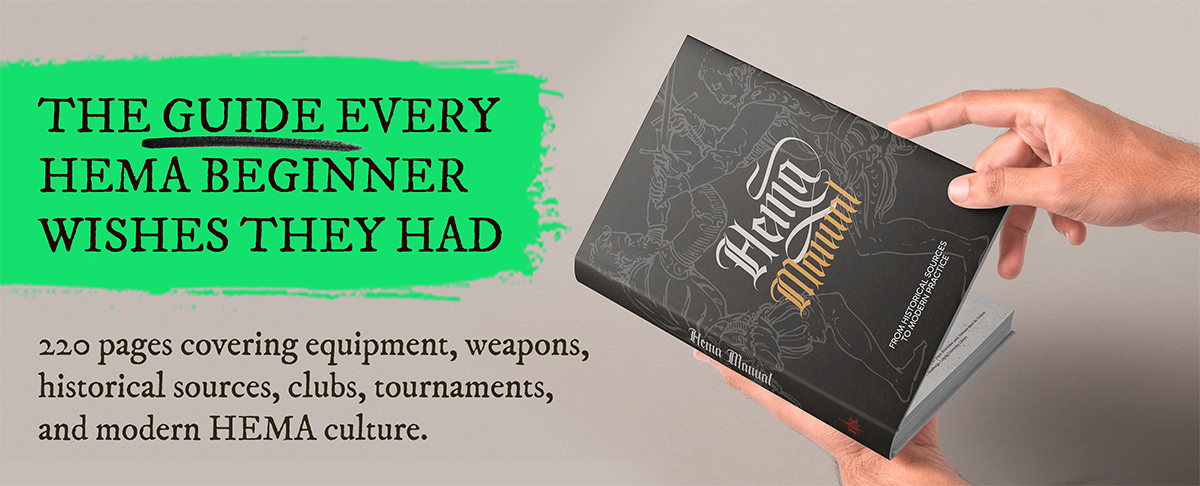
For a detailed breakdown of masks, jackets, gloves, protective equipment systems, safety standards, weapon simulators, and equipment planning strategies, see Chapters V and VI of HEMA MANUAL.
HEMA MANUAL is a 220-page hardcover guide to Historical European Martial Arts, covering historical sources, weapon systems, protective equipment, training culture, tournaments, clubs, and the international HEMA community.